14 sep 2025
Trip report: Devil's Dome loop, day 1
Four days in North Cascades NP and the Pasayten Wilderness
Between ending my summer internship and starting the new academic year I spent a little over a week off in Seattle. We decided to split the visit into two halves, and this backpacking trip served as the first ‘nature’ half (to the more ‘urban’ second counterpart).
Our choice of Devil’s Dome was primarily motivated by two factors: (1) it was a semi-long loop that has taken anywhere from 4-6 days, and (2) it avoided some of the more popular areas that were likely harder to get permits for (we planned pretty last minute). While not the most popular, there were at least a handful of trip reports for Devil’s Dome each year, so it seemed like there was up-to-date information about the route.
We opted to do the just around 40-mile loop in four days due to permit availability and scheduling constraints for the remainder of our week. Some useful and recent trip reports from prior years we used were this, this and this. These were very helpful for planning water refill stops and identifying campsites. However, we did opt to do it clockwise rather than counter-clockwise, which seems to be the opposite direction from most people. More on that later.
Overall, this route has everything you could possibly pack into a hike—amazing forests, mountain facades, lakes and rivers. It also has its share of challenges that perhaps make it a classic backpacking experience. For us, each day gave us something different.
Day 1: East Bank Trail to Devil’s Creek (12.3 mi)
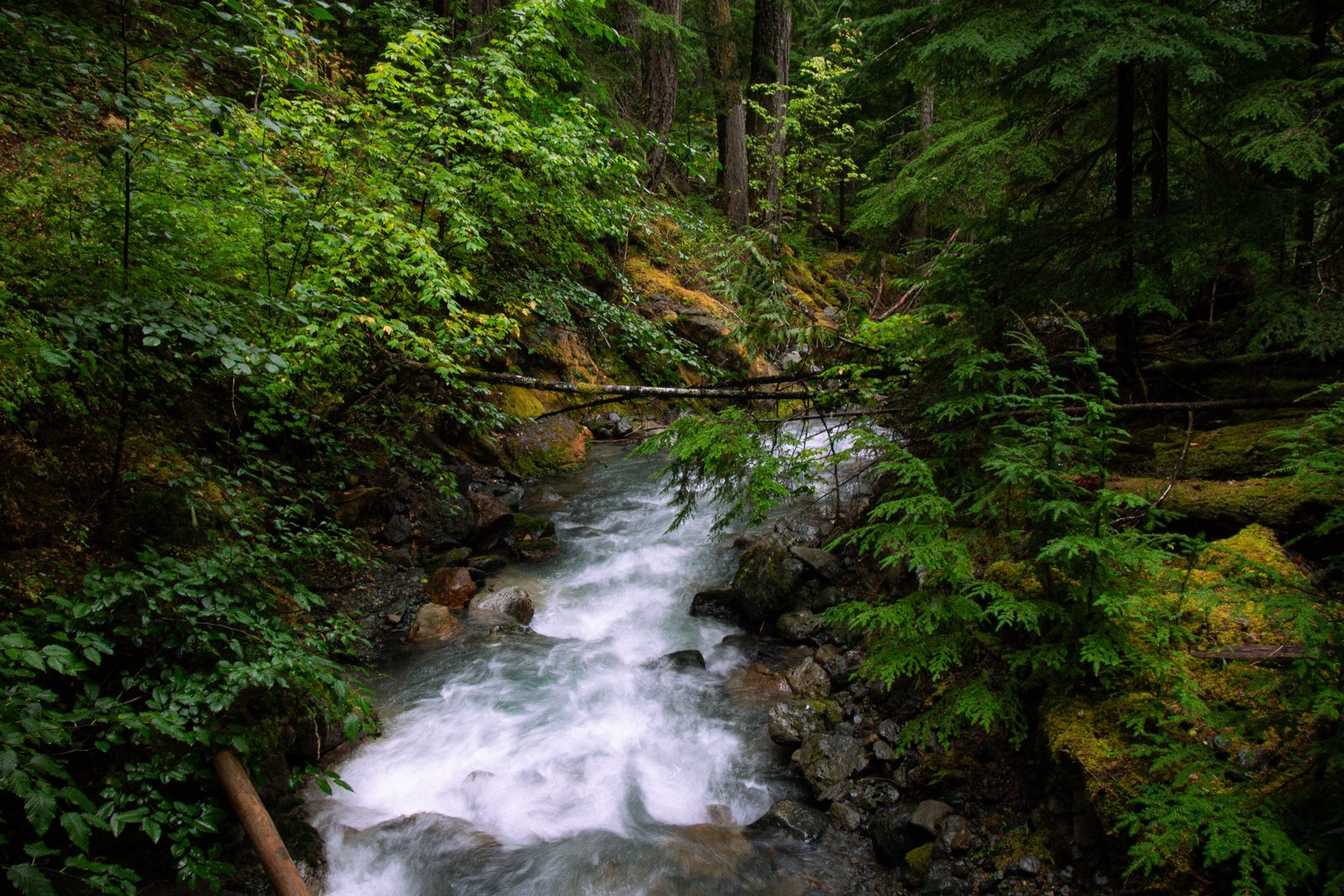
Our trip started off in Seattle, where we drove to the Marblemount Ranger Station to obtain a wilderness permit, bear country stuff and fuel. Then, we continued on until we hit the East Bank Trailhead off of North Cascades Highway. There was only about one other car parked in the small lot when we got there. The weather forecast called for rain, which arrived right as we started the hike. Though the forest canopy shielded us from a good amount of rainfall, the ground was actually quite wet and low bushes around the edge of the trails made for extremely wet shoes. This caused a good amount of discomfort for my hiking partner, who happened to be in front of me for most of the trail (and thus, collect a large portion of the water before my feet arrived).
East Bank Trail tends to be relatively flat and rolling, so many people prefer to save it for tired legs on the last day. There is also a good amount of poison oak, so I would definitely bring some longer pants. Our primary concern, however, was wildlife. At the start, we actually ran into a group of two on their way out from doing it the other direction, and they told us that they had run into someone who saw a bear a few days ago. There was also potentially some bear scat along the route, so we were on alert and made noise throughout the hike. Luckily, we did not end up seeing any evidence of bears.
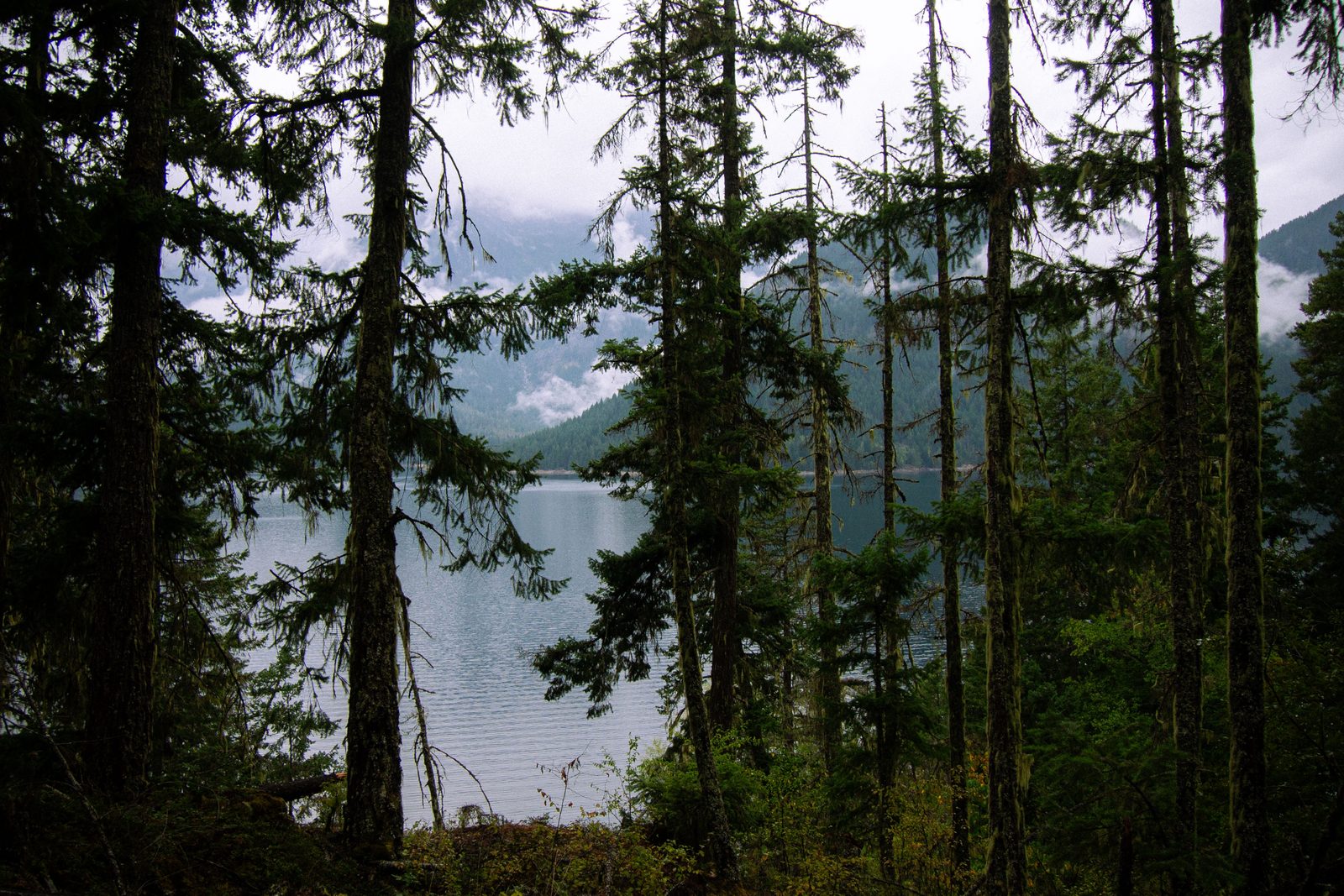
About halfway through, you finally move from the forest to the bank of Ross Lake and are rewarded with some stunning views of the lake and the surrounding mountains. I’m sure that on a sunny day the water would look amazing, but we got a much moodier scenery due to the clouds. Finally, after about 12 miles we hit our campsite at Devil’s Creek. There are a handful of sites there, but we were the only group that night. Each site has a small fire pit area and a lot of logs to sit on. There is also a flowing creek near the campground which provided plenty of water. Since we got a little delayed by the rain, we arrived at camp just barely in time to have enough light for dinner. Unfortunately, here is where we hit our first bump of the trip.
As we unloaded for dinner, we quickly discovered that we had way too much food for what our bear canister could hold. On top of our regular backpacking meals, we had somehow managed to buy an entire family pack of trail mix, a box of Pop Tarts, multiple packets of noodles, and I contributed my own collection of office Larabars (which Chris did not appreciate). Bedtime was approaching pretty quickly and we were unsuccessful in our search for bear boxes, so we really needed to think fast for ways to get rid of food in a bear-safe way.
Our first method was to simply eat. Both of us stuffed ourselves to our max capacity, but that only took care of the noodles.
Next, Chris had an idea to sacrifice one of our Nalgene bottles to hold trail mix instead of water, banking on the fact that bears haven’t quite
figures out how to open the small-lid Nalgenes yet. This made a good amount of progress, but still left us with a whole package of Pop Tarts that didn’t fit anyhwere. At this point, it was just about dark and the rain had started again. We were almost out of hope when Chris managed to locate a wilderness toilet!
After doing a quick scent check, we concluded that dropping food down there would be the safest option (goodbye, Pop Tarts). We ended the night cold, wet
and extremely full but relieved.
Total mileage: 12.36 mi
Elevation gain: 1,601 ft